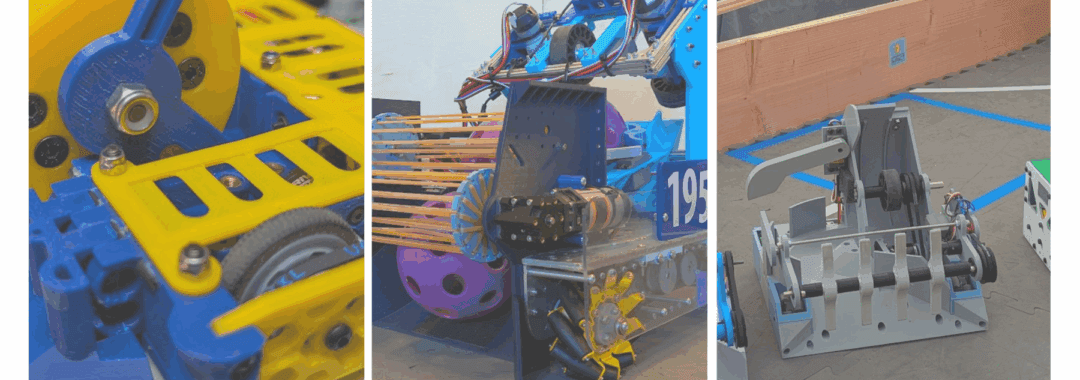
If you’ve browsed our website or follow us on our socials, especially now as our season gets underway, you might have seen the phrase competitive robotics thrown around. But what exactly does it mean?
The broad strokes: Participants build and program robots to complete certain challenges. And at the actual competitions, they can showcase what they’ve been working on while competing with robots.
And the term “competing” is used pretty loosely here.
Combat vs Competitive
While they sound similar, combat and competitive robotics aren’t the same thing. Yes, they both run like sporting events with complex machines instead of human athletes. And yes, it’s a way to show off technical and engineering skills along with a person’s understanding of math and science. But there are key differences.
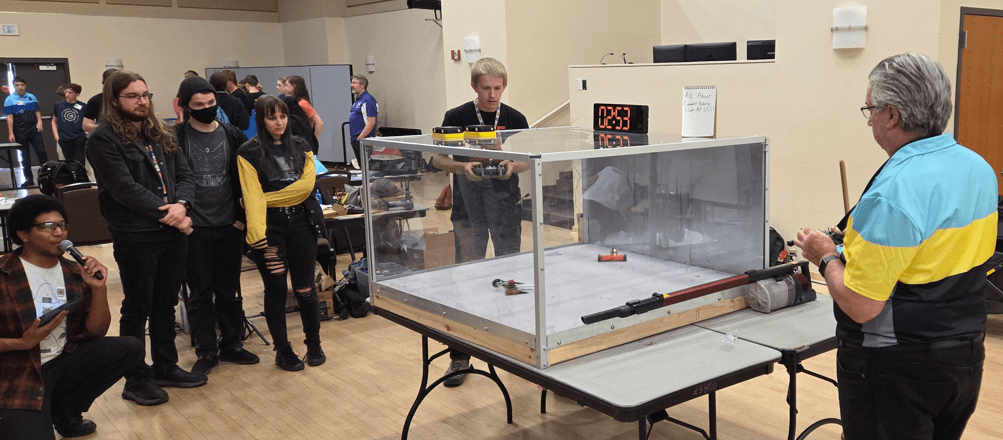
Fairyweight combat robotics match from the 2025 MITEE Gobble Squabble.
In combat robotics, you’re building a robot to face off against another robot directly. There are different weight classes of combat robotics — like fairyweight (150 grams), antweight (1 lb), beetleweight (3 lb), sportsman (12 lb), featherweight (30 lb), etc. Along the Colorado Front Range, you can typically find fairyweight, antweight, and beetleweight class competitions. The design focus is durability, destruction, kinetic energy, and/or speed when building the robot. Think BattleBots™. Plus, oftentimes, the robots are controlled remotely by someone during the fight. Usually in a fully enclosed field for safety from flying pieces, fires, or battery leaks. As you probably figured out…destruction can and will happen.
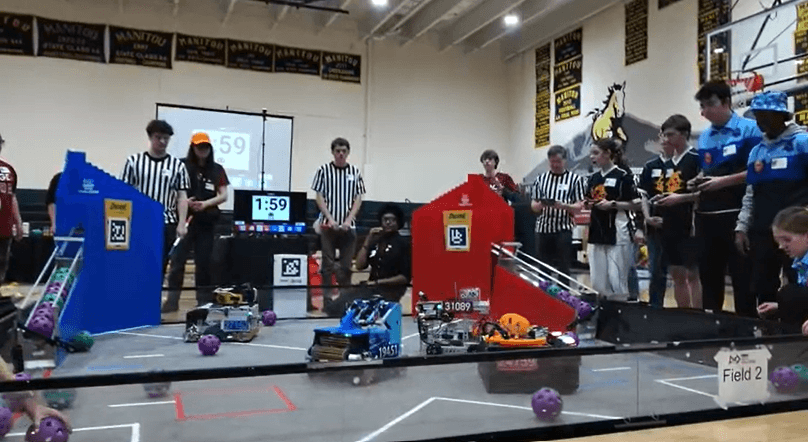
FIRST Tech Challenge 2026 DECODE game challenge match held in Manitou Springs.
On the other hand, in game challenge competitive robotics, you’re getting the robot to complete a specific task to gain points or move further along in an obstacle course. While constructing your machine, you might be more focused on precision, complex programming, and coding. Ensuring the robot can function autonomously with precise movements (through sensors, vision, etc.) may also be more important in competitive robotics.
Some examples of what a challenge could be are:
- The robot must race along a line on the floor without wandering off
- The robot must sort or stack specific objects
- The robot must navigate a maze independently
When competition day rolls around, the team will bring their robot to the venue and demonstrate its capabilities in the assigned challenge(s). Points can be awarded based on a number of criteria. For example, whether and if a robot completes the challenge, completing more complex actions, and more.
Why It Matters
Competitive robotics can serve as a gateway for many students to learn more about the STEM field outside of a classroom. And for adults, it’s a great way to keep engaging in STEM and keep the mind active. Plus, it’s just plain fun! You can geek out, get first-hand experience in robotics, and connect with others who have similar interests.
It’s an opportunity to explore and gain more experience in:
- Programming (with programming languages like Java, Python, C++)
- Engineering
- Mathematics
- Physics
- Scientific Principles
- Technology Literacy
At the same time, participants can learn soft skills to take into any career like teamwork, communication, gracious professionalism, problem-solving under pressure, project management, critical thinking, and more.
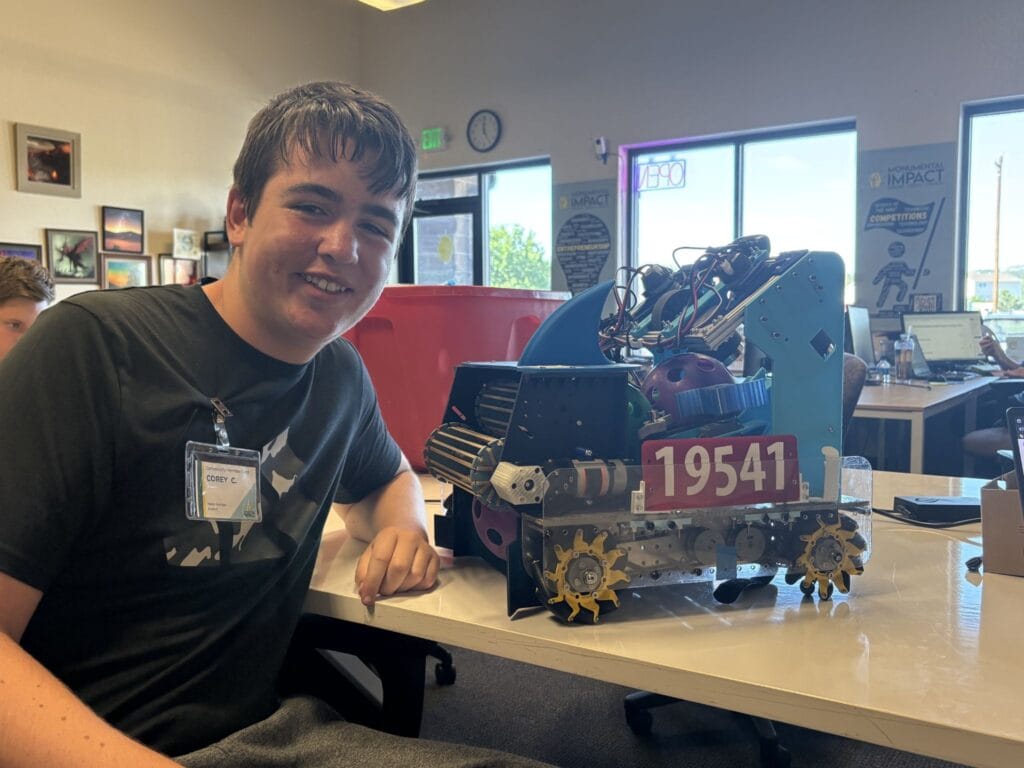
Corey, Team Captain of the Bionic Sharks FTC Team 19541.
How You Can Get Involved
If you’re a high school student looking for a team to join, you don’t have to look far. Monumental Impact has its own team, the Bionic Sharks! They compete in the FTC and are currently welcoming new members for the BioBuzz season. Their next FTC Orientation is August 26th, and the Game Reveal will happen on September 12th.
There are also many opportunities for all ages to compete in Combat Robotics across Colorado’s Front Range and nationally. A good source for finding events is RobotCombatEvents.com.
For high school students, college students, and adults looking to collaborate and share stories with other like-minded individuals, Monumental Impact hosts a Combat Robotics Club that meets twice a month.
Individuals not interested in fully damaging their robots in matches can also compete in the newly released Open Robotics Competition (ORC).
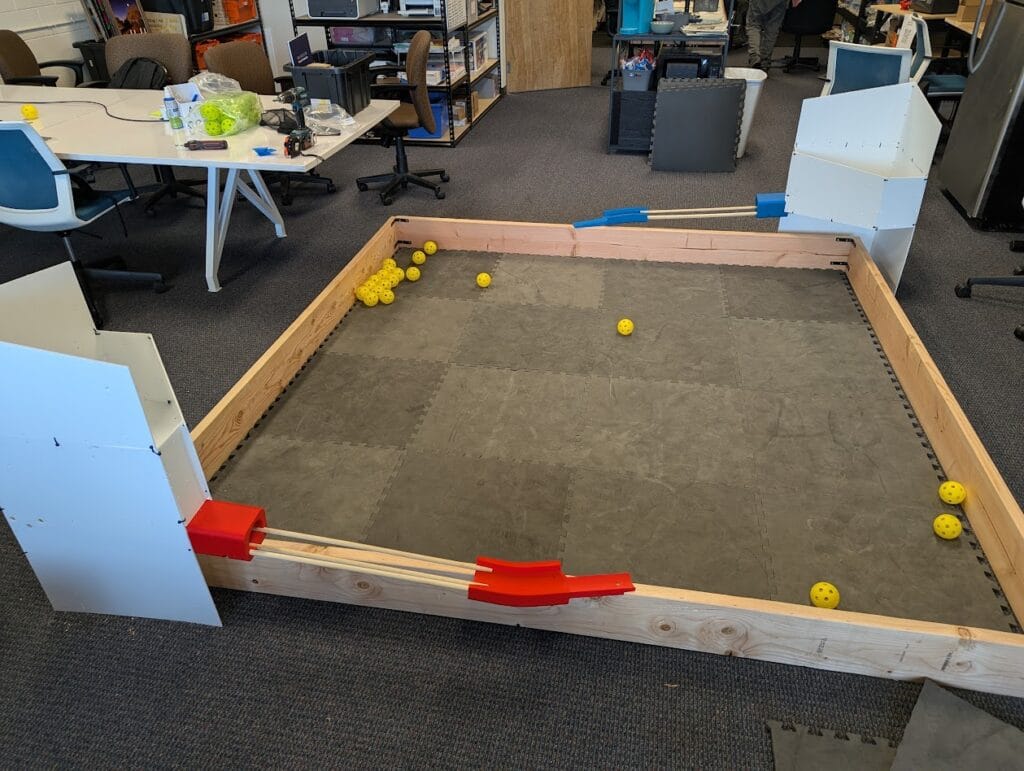
ORC is similar to FTC in that game challenges are released each year and include 2-team alliances. The event, though, involves a smaller field and robots, which also lowers the cost of entry (helping to make it more accessible for anyone interested in competing).
And if the timing to get going just isn’t happening this fall, Monumental Impact will be hosting their 6th Annual MITEE Gobble Squabble, where you can see combat robotics, FIRST Tech Challenge (FTC), Open Robotics Competition (ORC), and more at a showcase of robotics and technology in November.